Introduction
In October 2025 Diana and I moved from Ruston House to a recently converted farm labourer's cottage in Winterton-on-Sea, a fishing village on the Norfolk coast. The cottage is attached to a converted barn, now our neighbour's home, and a set of old sheds that form a bedroom wing in our home.
While we sorted out the new house I found myself too busy to toot on Mastodon but that period is coming to an end and it's time to start recording a little of our lives again. This then is the first new page created on this site since the house move and records a walk that we took on Saturday 24 January 2026 around part of the village and back along the beach.
The Start of the Walk
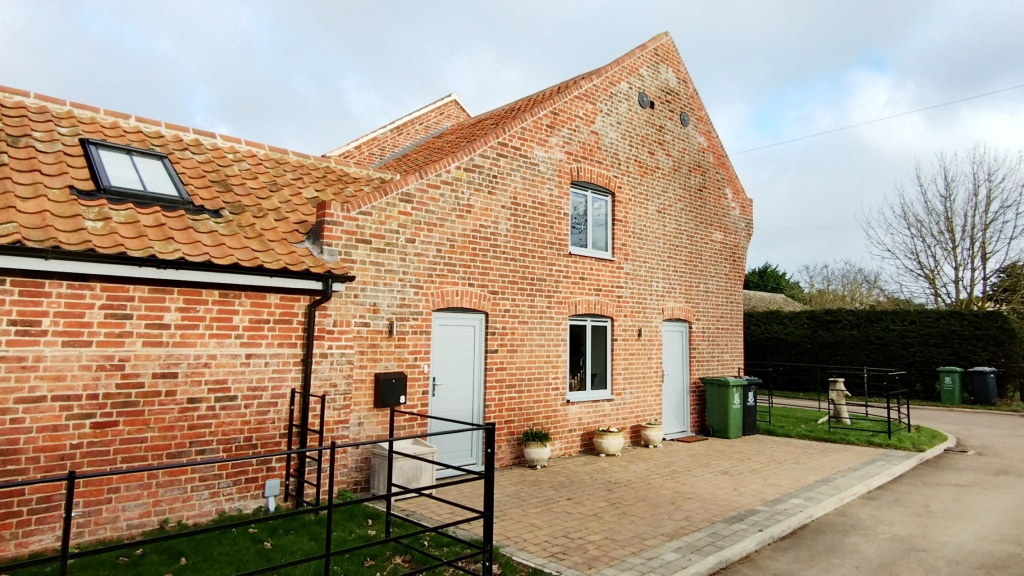 This picture, the starting point for our walk, was taken
a few weeks before the walk undertaken today.
This picture, the starting point for our walk, was taken
a few weeks before the walk undertaken today.
Passing round the corner beyond our cottage and past the barn we find ourselves on a private footpath before we encounter "The Holway". This transitions from a private road, with a pedestrian right of way to a public road as we get closer to the village.
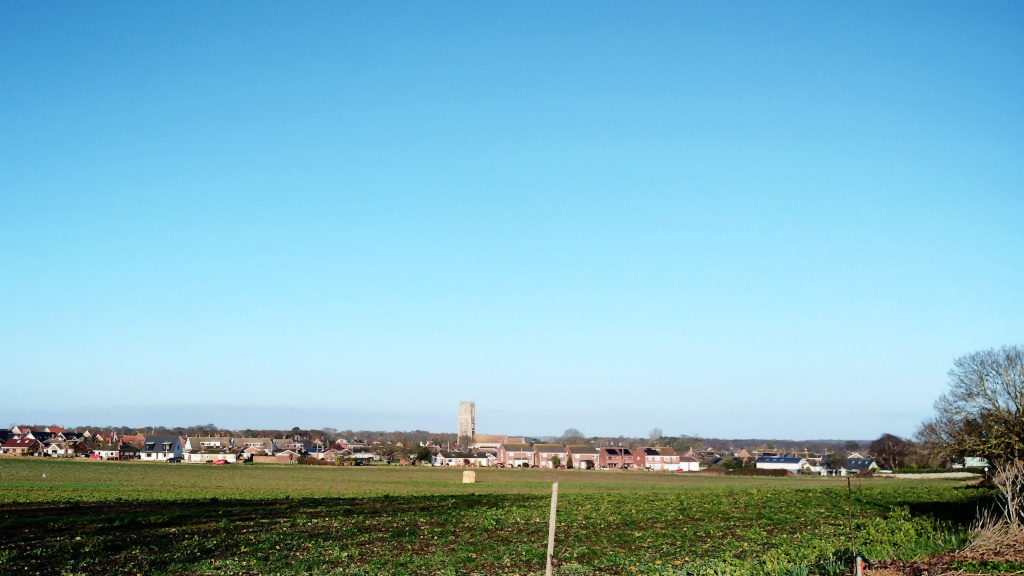 Once on The Holway, through gaps in the hedge, you can see
the village spread out below you.
Once on The Holway, through gaps in the hedge, you can see
the village spread out below you.
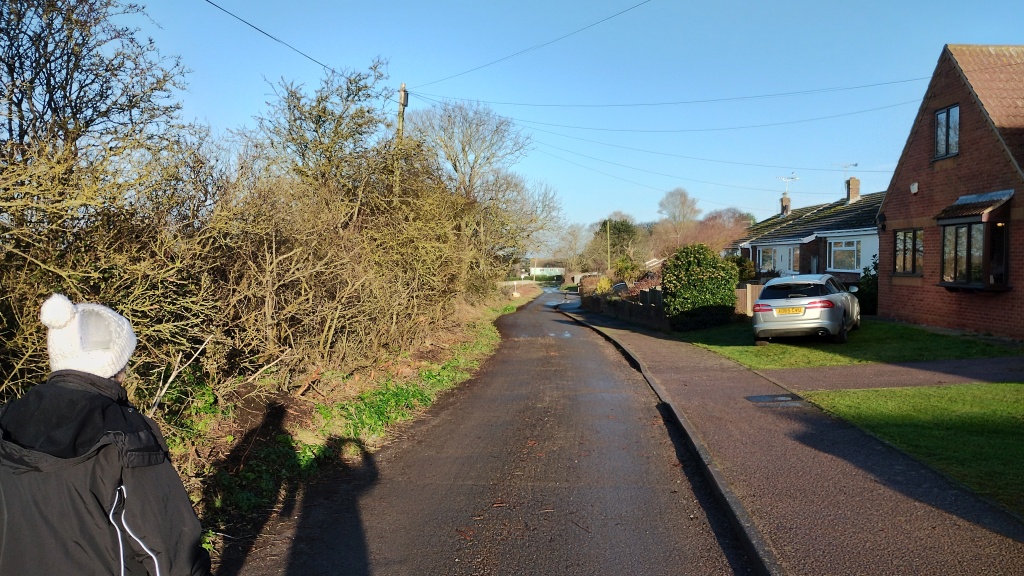 Further down towards the village and The Holway has become
a public road.
Further down towards the village and The Holway has become
a public road.
A Stop for Breakfast
 The village Post Office is also "Poppy's Tea Room and Store".
However, it serves breakfast and lunches as well and is
popular with villagers.
The village Post Office is also "Poppy's Tea Room and Store".
However, it serves breakfast and lunches as well and is
popular with villagers.
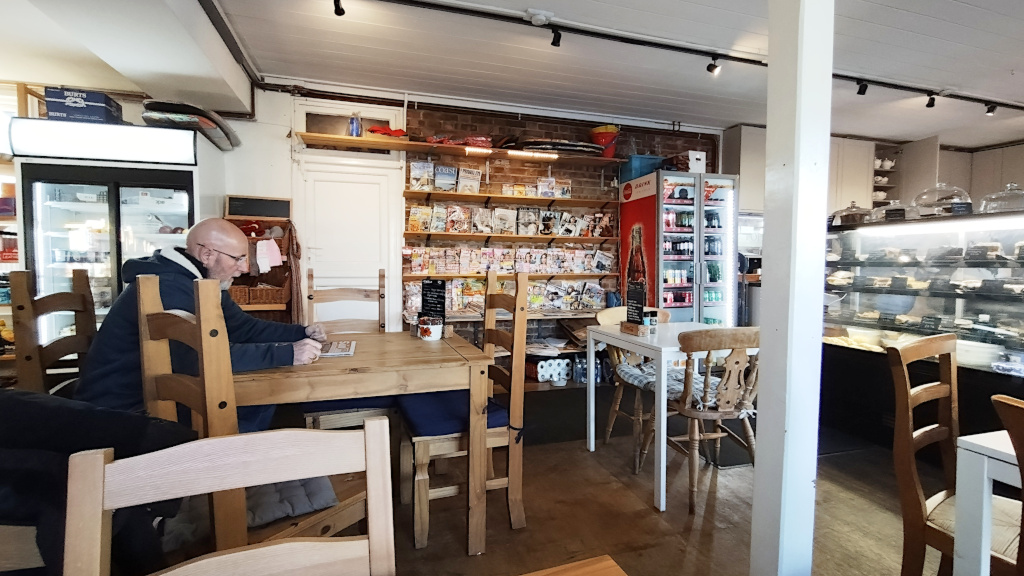 The store sells a range of things from beach toys to newspapers
and magazines, refreshments for holiday makers and more.
The store sells a range of things from beach toys to newspapers
and magazines, refreshments for holiday makers and more.
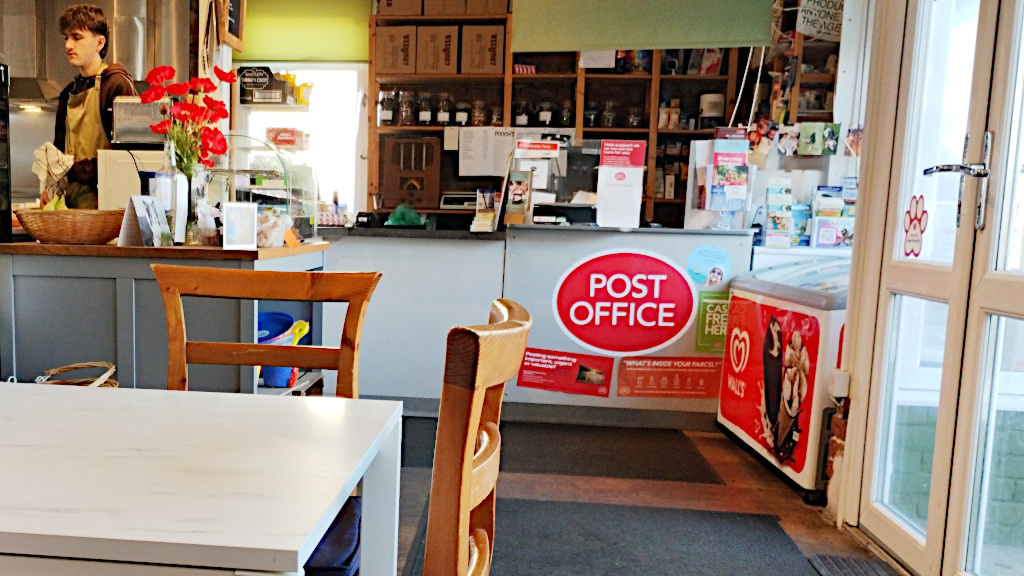 After sending only a picture of the kitchen area to family members
on WhatsApp, I felt I had to send a further picture to prove we
really were in the local Post Office.
After sending only a picture of the kitchen area to family members
on WhatsApp, I felt I had to send a further picture to prove we
really were in the local Post Office.
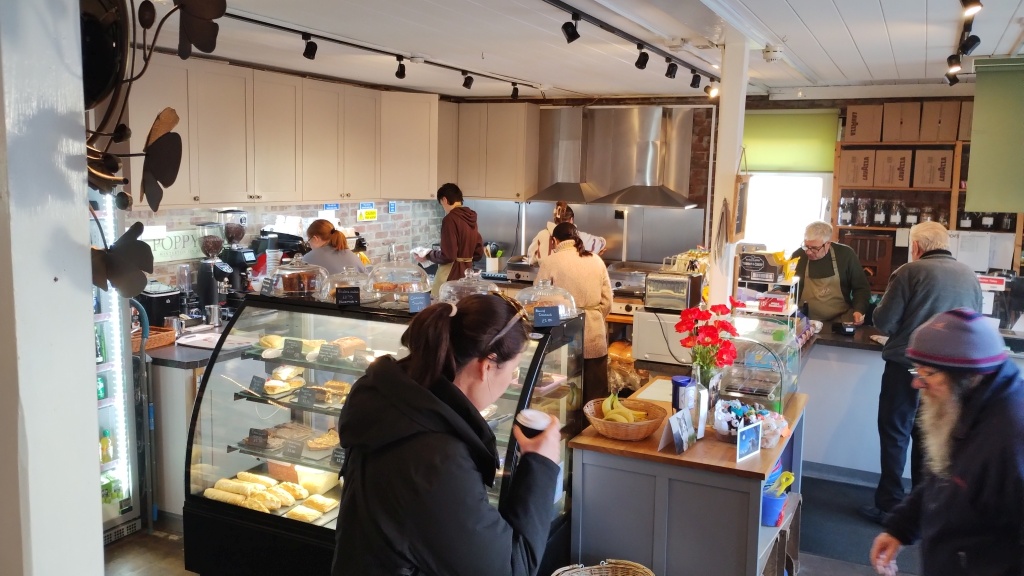
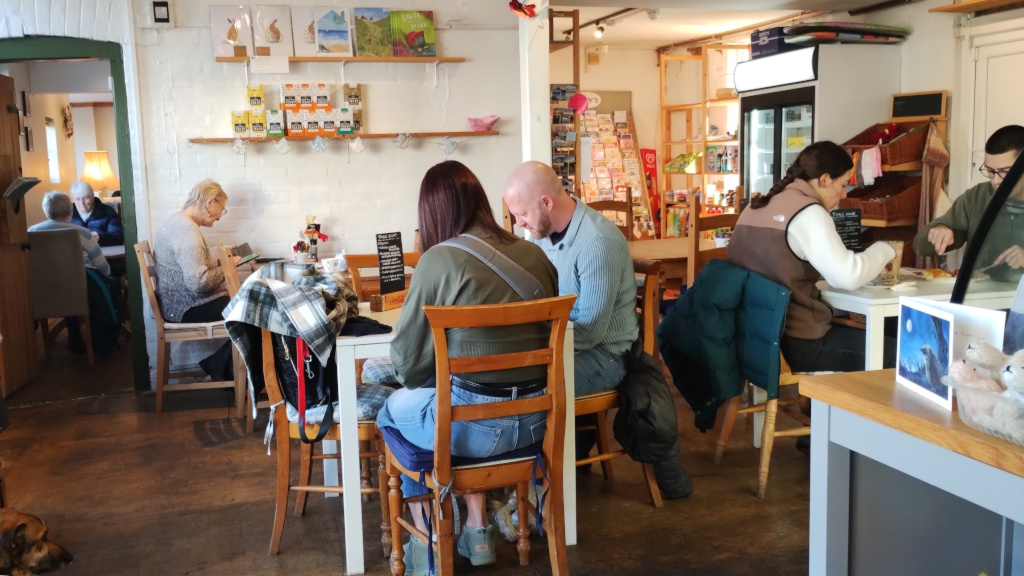 While paying for our breakfast I took a further picture from the
PO Counter. You can see there is a second dining area through
a doorway and shelves for more material, including birthday
cards.
While paying for our breakfast I took a further picture from the
PO Counter. You can see there is a second dining area through
a doorway and shelves for more material, including birthday
cards.
On Through the Village
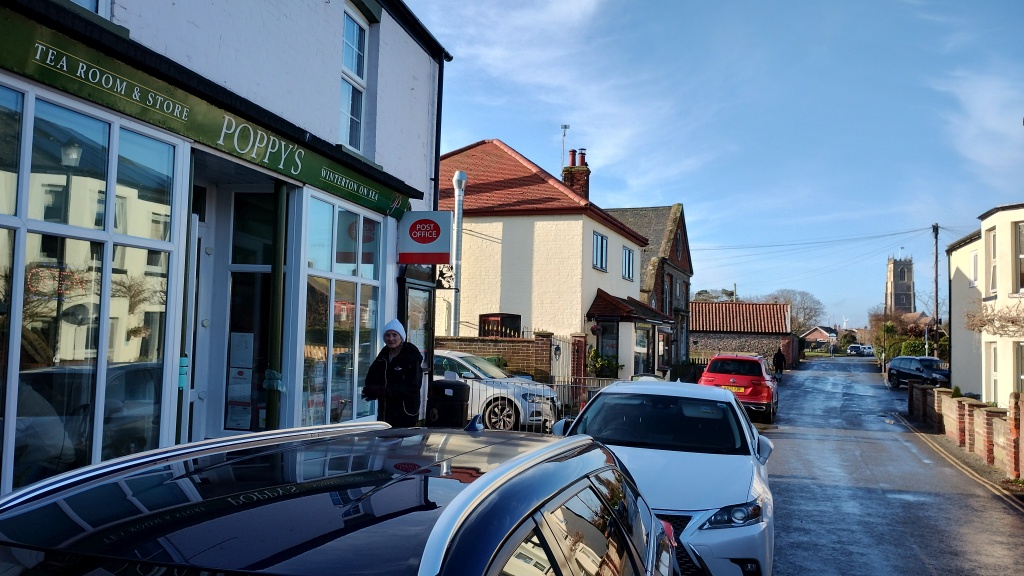 Outside the Post Office and looking westwards along Beach Road
you see the tower of Holy Trinity and All Saints Church.
Outside the Post Office and looking westwards along Beach Road
you see the tower of Holy Trinity and All Saints Church.
We took a stroll a few yards towards the church but turned onto Market Place, passing from there onto North Market Road. We were in search of and found a cottage with a similar name to ours. There had been some doubt about whether our cottage could take the same name as another in the village, but eventually the Council or Royal Mail decided it could be allowed. Once found we continued to the end of the road and then turned across the dunes and towards the beach.
Across the Dunes
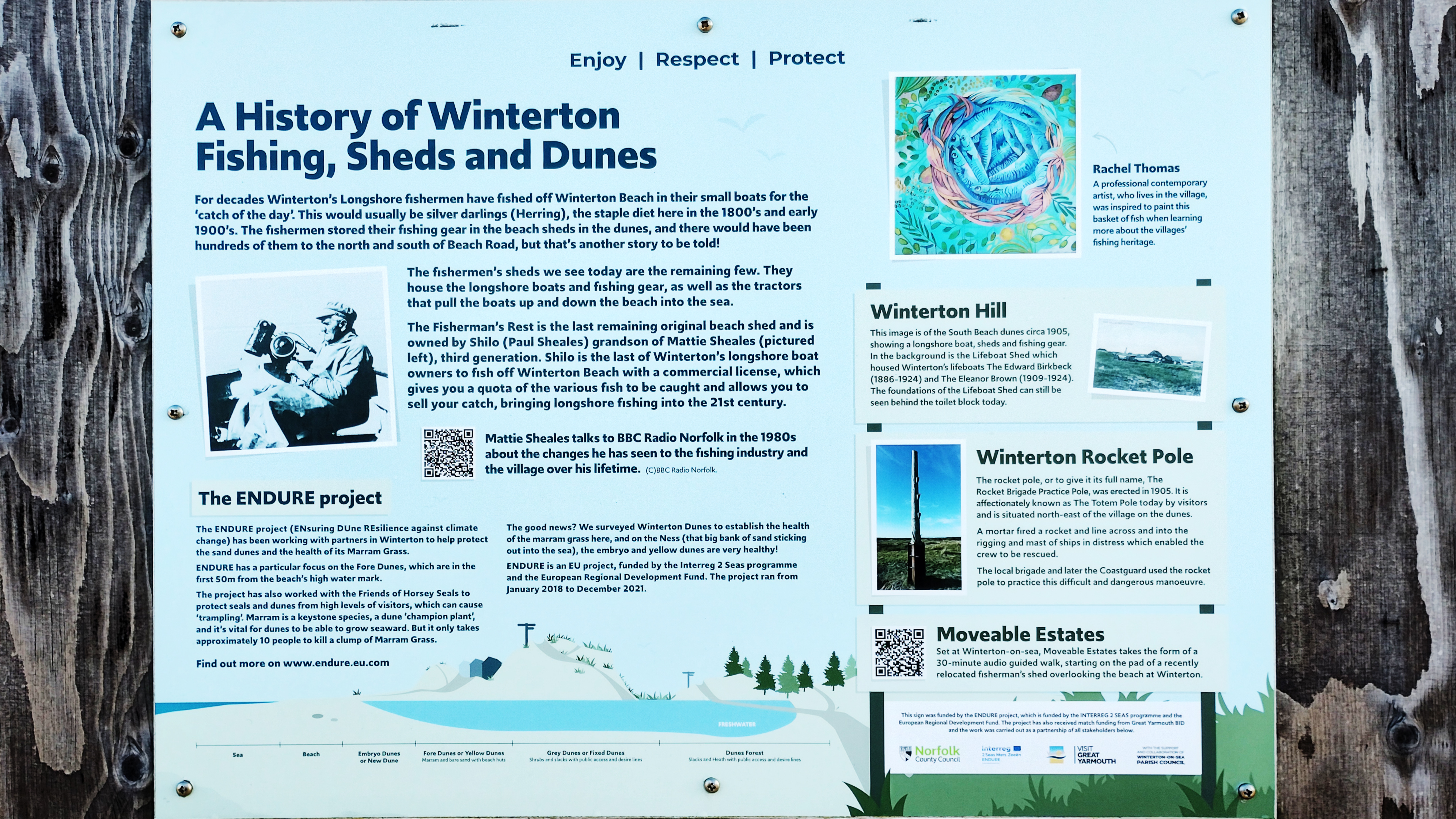 Once on the dunes we approached a cluster of
sheds, one of which had a notice on it explaining the history
of the area.
Once on the dunes we approached a cluster of
sheds, one of which had a notice on it explaining the history
of the area.
Click/tap on the
image to open a version large enough to allow all the text to
be read.
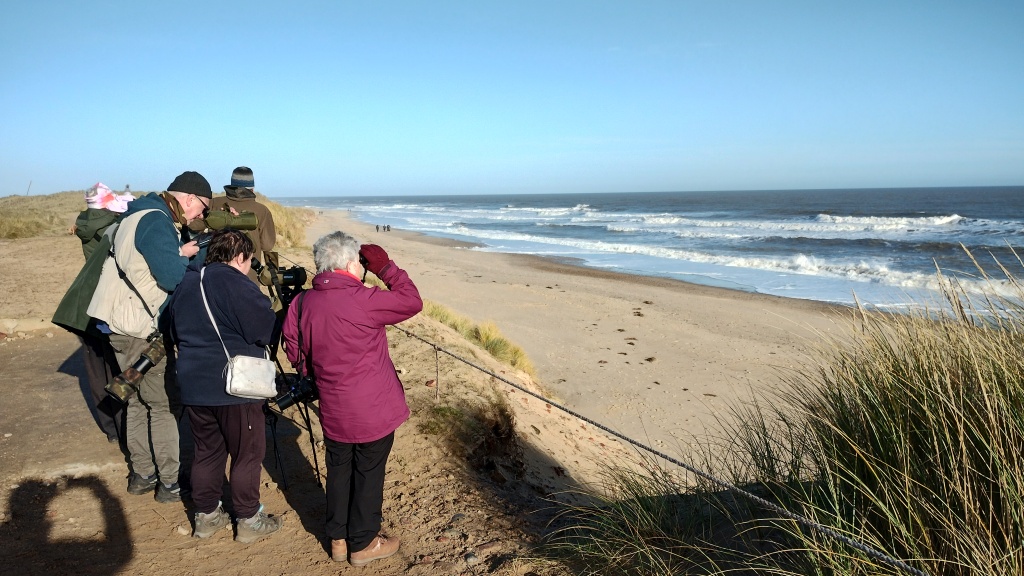 Walking a few yards further we encountered the beach There
was a cluster of people there with camera with long lens. At
that point we assumed they were twitchers looking for some
rare bird they had been told about. However, we could see
nothing special.
Walking a few yards further we encountered the beach There
was a cluster of people there with camera with long lens. At
that point we assumed they were twitchers looking for some
rare bird they had been told about. However, we could see
nothing special.
The Car Park
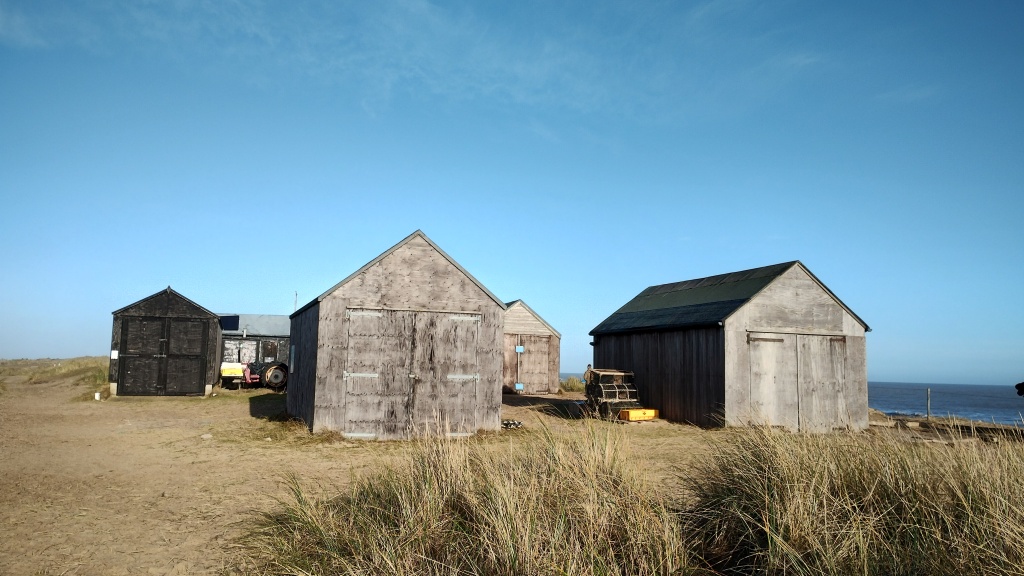 Withdrawing from the group of photographers, we found
ourselves on the Beach Car Park. We're told this is
exceptionally busy in the summer, but it was a good position
from which to photograph the fishing sheds.
Withdrawing from the group of photographers, we found
ourselves on the Beach Car Park. We're told this is
exceptionally busy in the summer, but it was a good position
from which to photograph the fishing sheds.
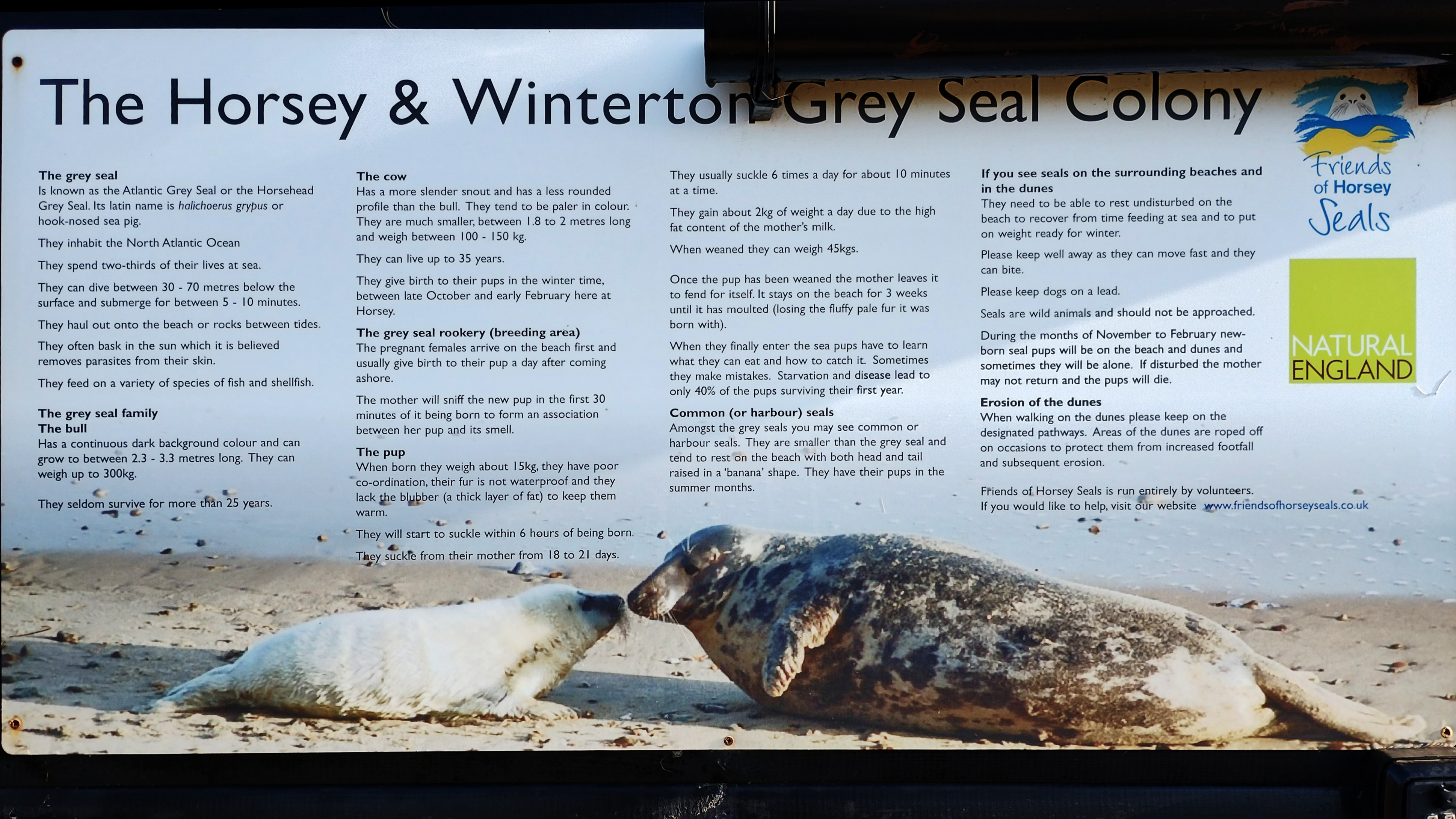 On the edge of the car park we found a much
smaller shed. This had a notice about the local seal colony.
It made us realise that is probably what the photographers
were hoping to see.
On the edge of the car park we found a much
smaller shed. This had a notice about the local seal colony.
It made us realise that is probably what the photographers
were hoping to see.
Click/tap
on the image to open a version large enough to allow all the
text to be read.
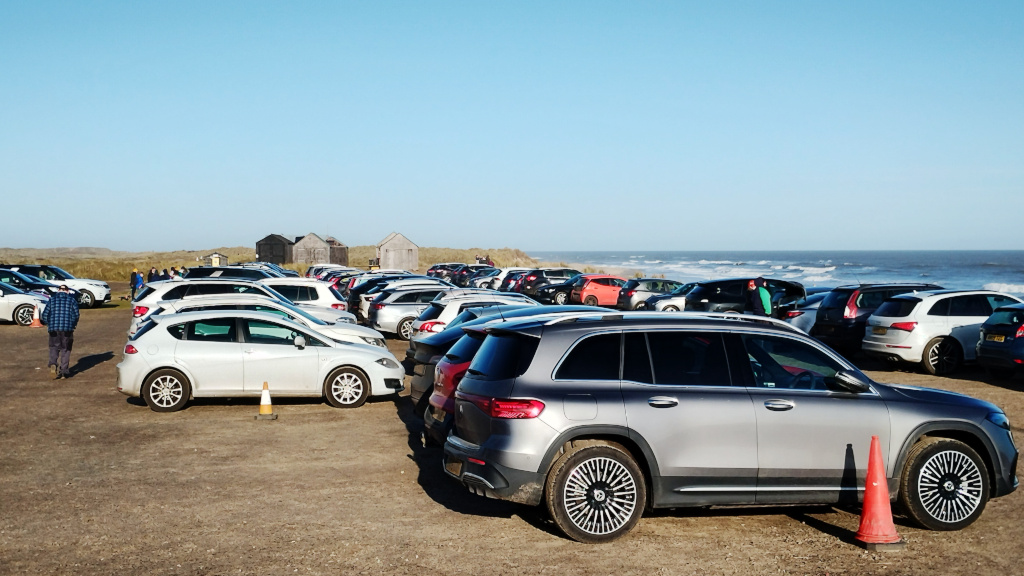 After walking through the car park I looked back northwards.
While it was a bright day, it was chilly, with a wind that ensured
everyone was well wrapped up. As a result I was still surprised
to see the car park so full. I can imagine doing this walk in the
summer will be considerably more crowded.
After walking through the car park I looked back northwards.
While it was a bright day, it was chilly, with a wind that ensured
everyone was well wrapped up. As a result I was still surprised
to see the car park so full. I can imagine doing this walk in the
summer will be considerably more crowded.
Beach Refreshments
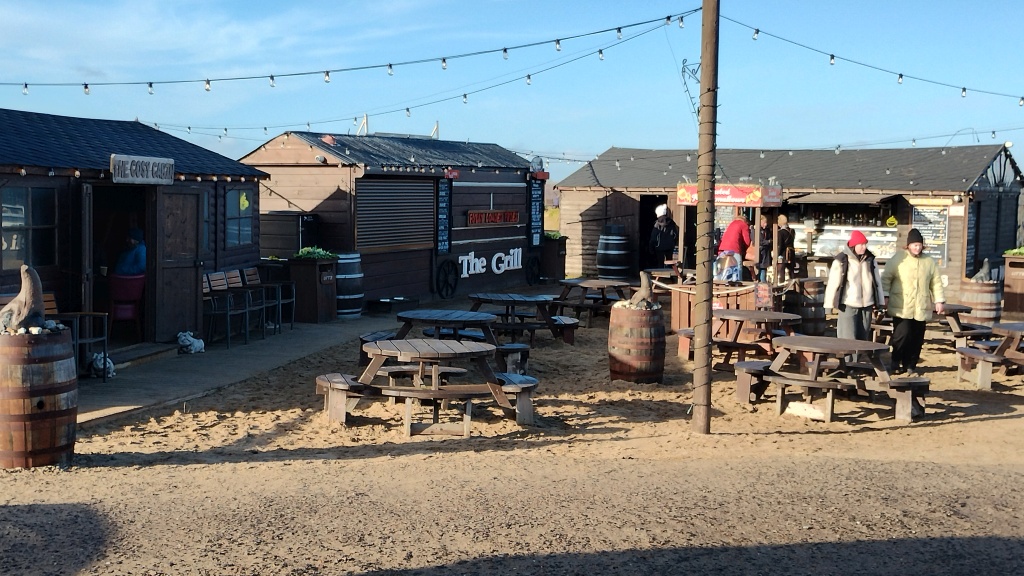 On the landward side near the car park entrance is a set of
sheds where food and drink can be bought and others that
just seemed to offer shelter where you could eat the food.
It's not a surprise there were more people there than outside.
On the landward side near the car park entrance is a set of
sheds where food and drink can be bought and others that
just seemed to offer shelter where you could eat the food.
It's not a surprise there were more people there than outside.
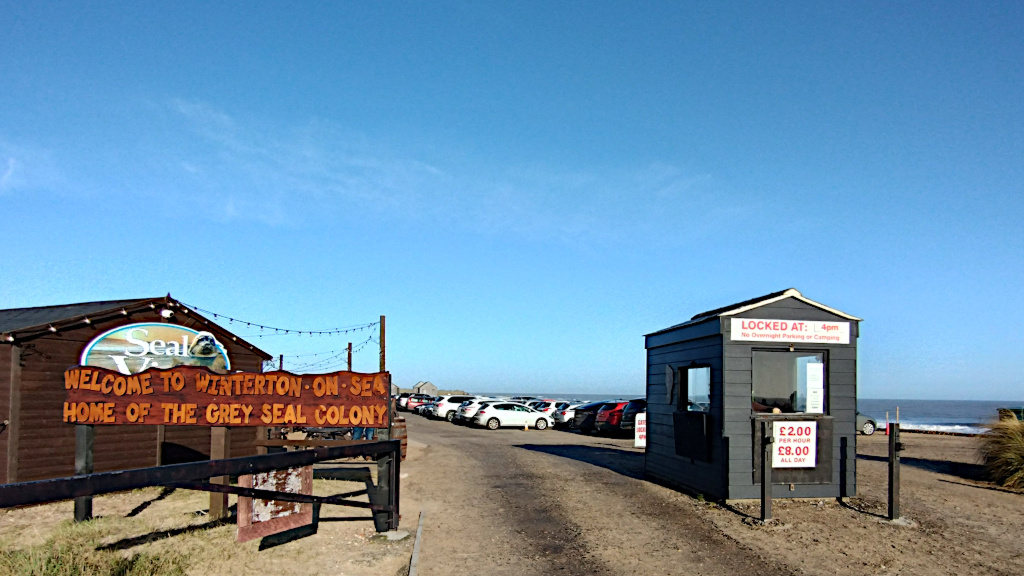 I was surprised by two things at the entrance to the car park. I
always think of Horsey as as the "Home Of The Grey Seal
Colony" and I guess I'm just not used to car park fees.
I was surprised by two things at the entrance to the car park. I
always think of Horsey as as the "Home Of The Grey Seal
Colony" and I guess I'm just not used to car park fees.
Clear Evidence of Erosion
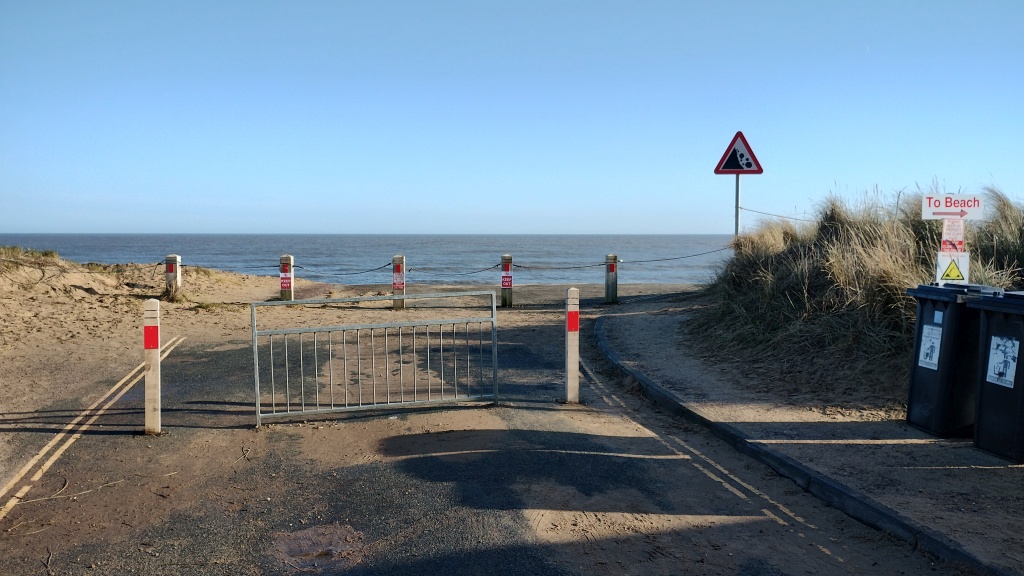 I've cheated a bit here! I took this photograph moments after
the following one. These days you swing left into the Beach
Car Park. You used to be able to carry straight on to the car
park.
I've cheated a bit here! I took this photograph moments after
the following one. These days you swing left into the Beach
Car Park. You used to be able to carry straight on to the car
park.
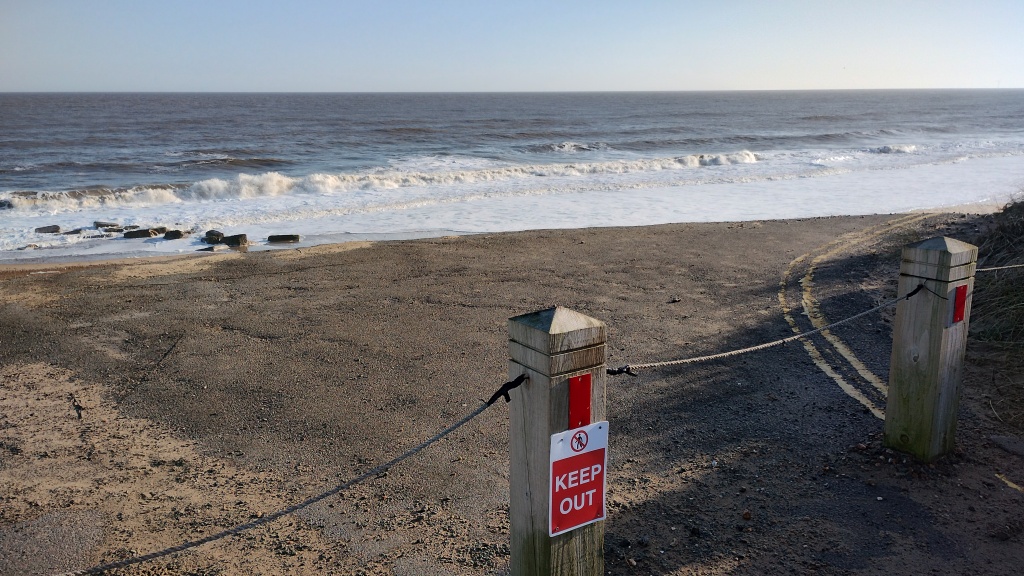 When you do get to the end of the road you see a significant
drop down to the beach. It's a shame that this photo rather
hides the drop with the contrast between tarmac and wave
foam.
When you do get to the end of the road you see a significant
drop down to the beach. It's a shame that this photo rather
hides the drop with the contrast between tarmac and wave
foam.
More History, More Dunes
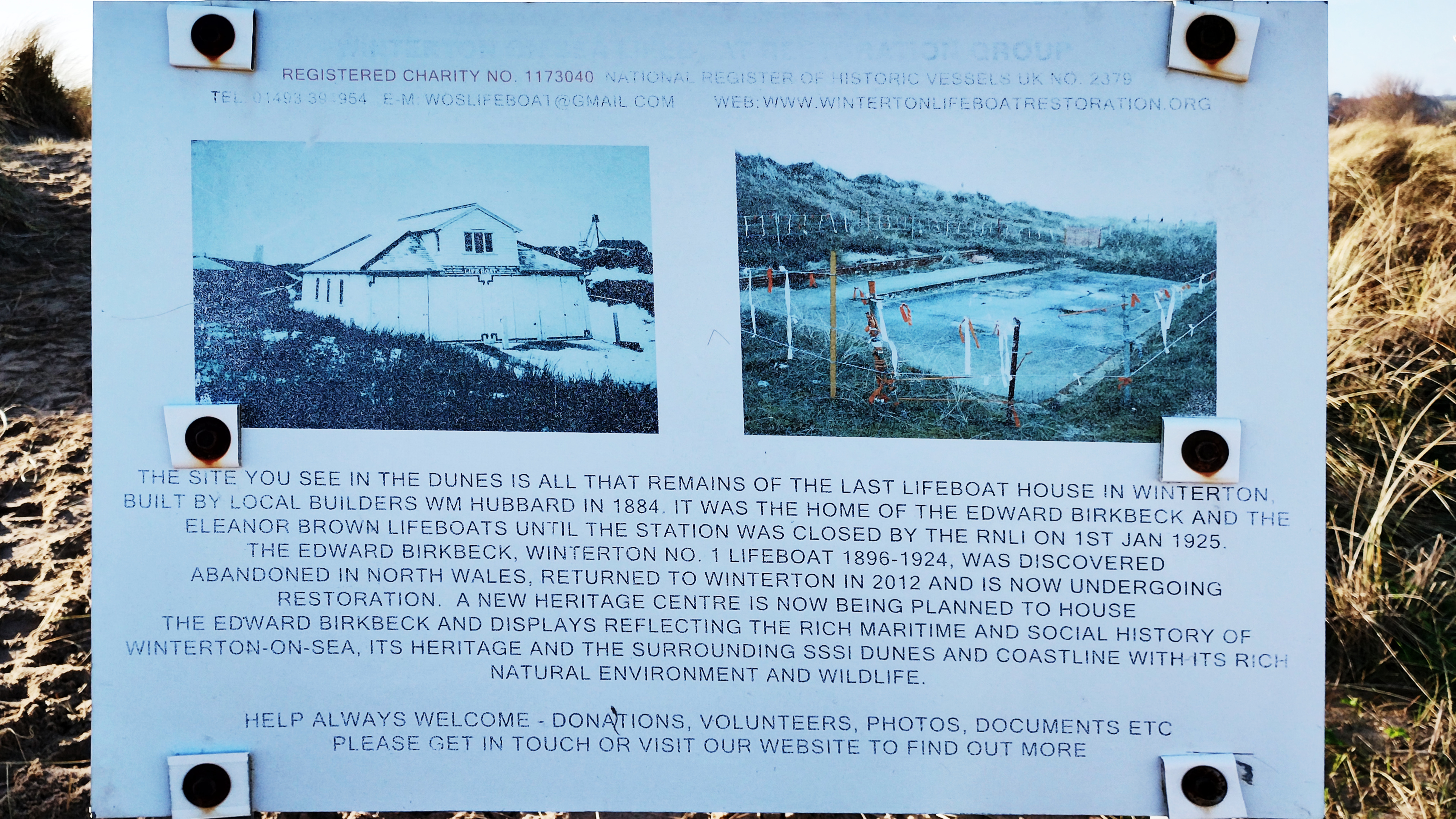 A little south and close to the end of Beach
Road I found another notice. This one is about the remains of
Winterton's last Lifeboat house.
A little south and close to the end of Beach
Road I found another notice. This one is about the remains of
Winterton's last Lifeboat house.
Click/tap on the image to open a version large enough to allow
all the text to be read.
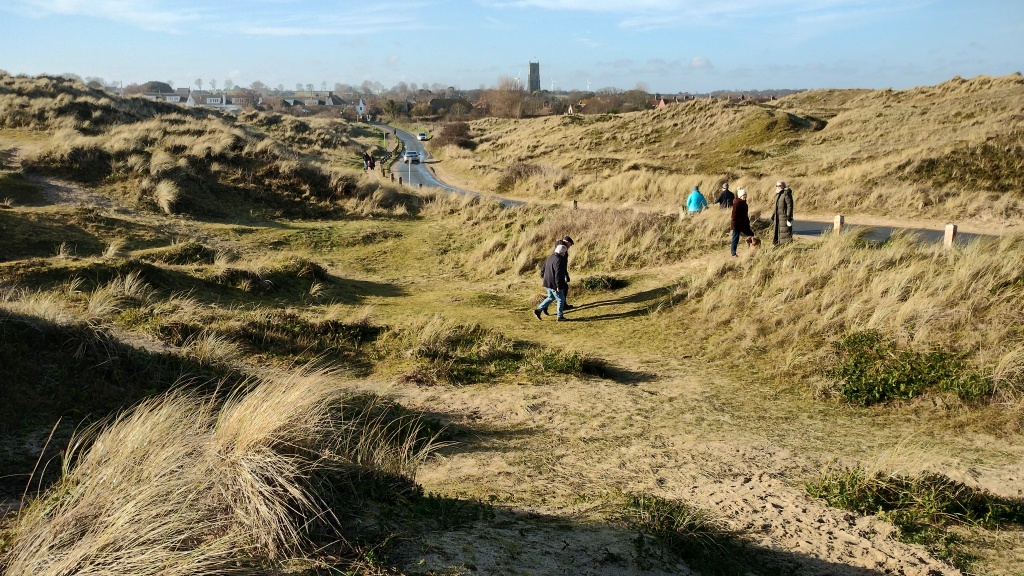 A few yards further on and I took a photo looking inland along
Beach Road, towards the village. It made me think, "Who says
Norfolk is flat!"
A few yards further on and I took a photo looking inland along
Beach Road, towards the village. It made me think, "Who says
Norfolk is flat!"
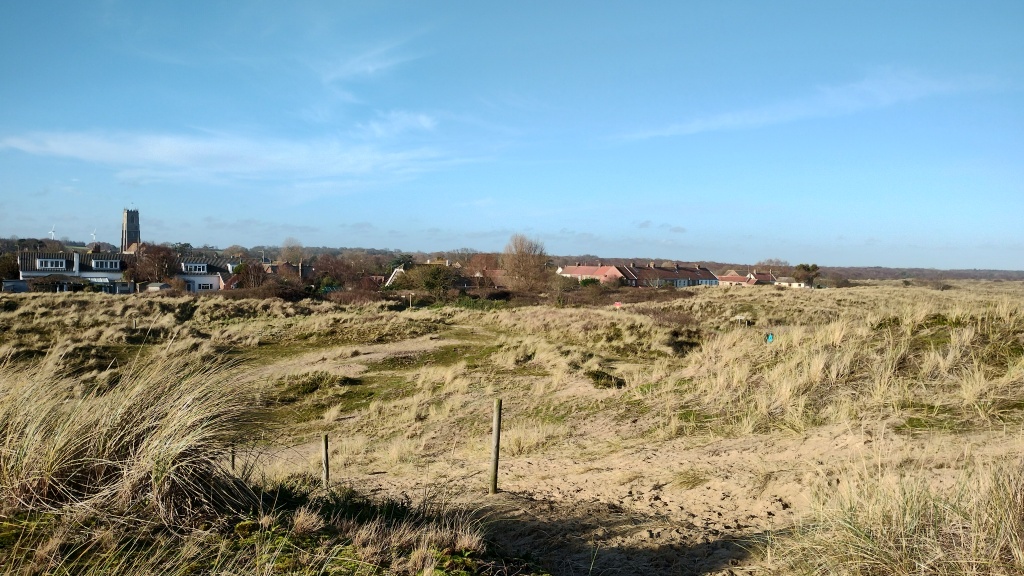 I climbed to the nearest high point to took a further photo
looking back towards the north end of the village. To the
right you can just make out the upstairs windows of the
white painted cottage we had been looking for, one of
those furthest north in the village.
I climbed to the nearest high point to took a further photo
looking back towards the north end of the village. To the
right you can just make out the upstairs windows of the
white painted cottage we had been looking for, one of
those furthest north in the village.
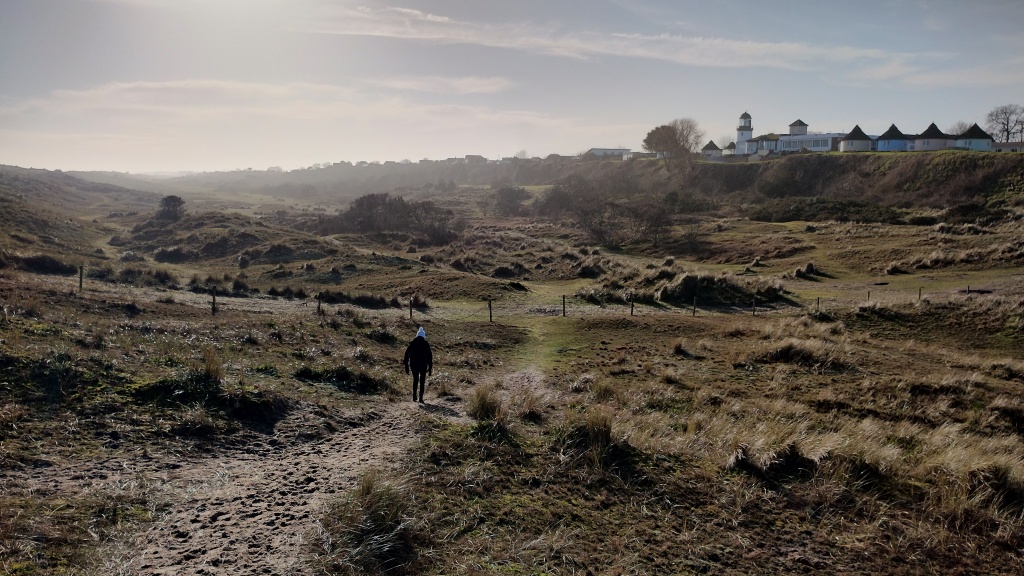 From the high point we made our way south, homewards.
Taking the shot into the sun provided an interesting effect,
but you can still make out the round thatched chalets of the
Hermanus holiday park.
From the high point we made our way south, homewards.
Taking the shot into the sun provided an interesting effect,
but you can still make out the round thatched chalets of the
Hermanus holiday park.
Return to Civilisation?
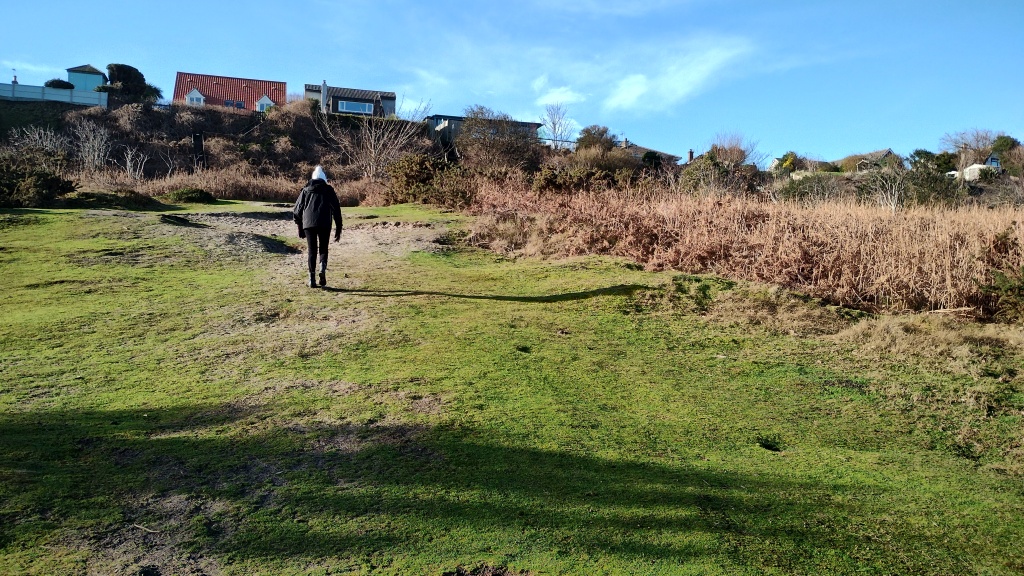 Once far enough south we turn towards the cliffs, if you
can call the steep slope that. Squeezed between two
of the houses at the top is a narrow footpath, and it's
that which is our objective.
Once far enough south we turn towards the cliffs, if you
can call the steep slope that. Squeezed between two
of the houses at the top is a narrow footpath, and it's
that which is our objective.
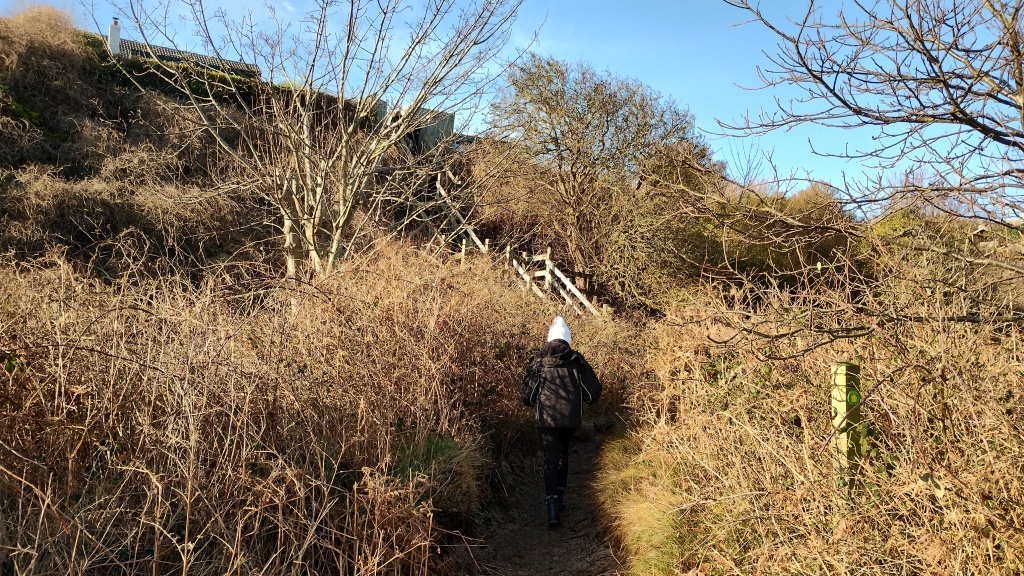 Getting closer you see the steps. They are in a truly
rickety condition currently. I assume it's a Parish Council
duty to maintain them and wonder when repairs are
planned.
Getting closer you see the steps. They are in a truly
rickety condition currently. I assume it's a Parish Council
duty to maintain them and wonder when repairs are
planned.
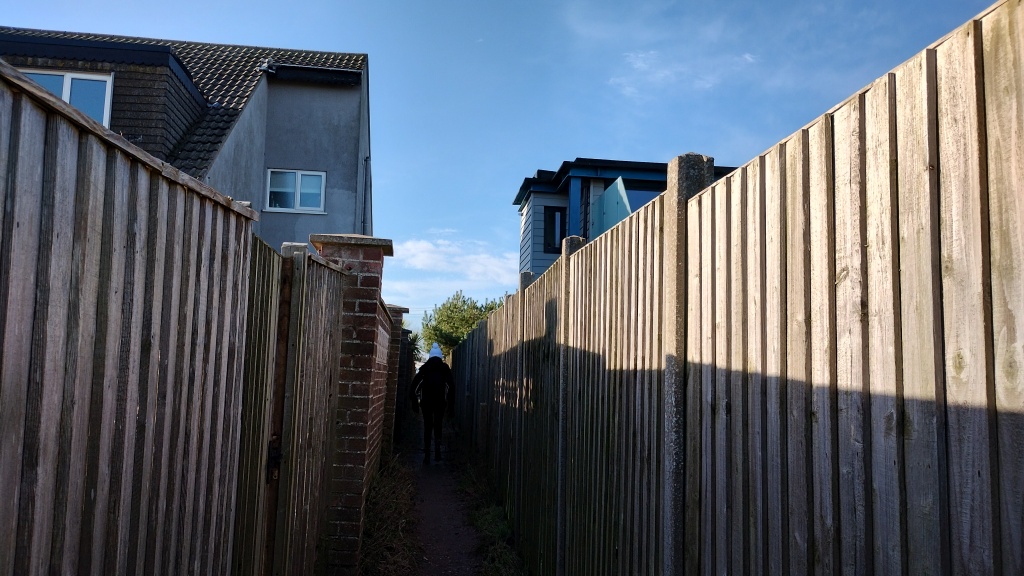 Once at the top of the steps you progress between two
tall close boarded fences making your way through
to the chalet park beyond.
Once at the top of the steps you progress between two
tall close boarded fences making your way through
to the chalet park beyond.
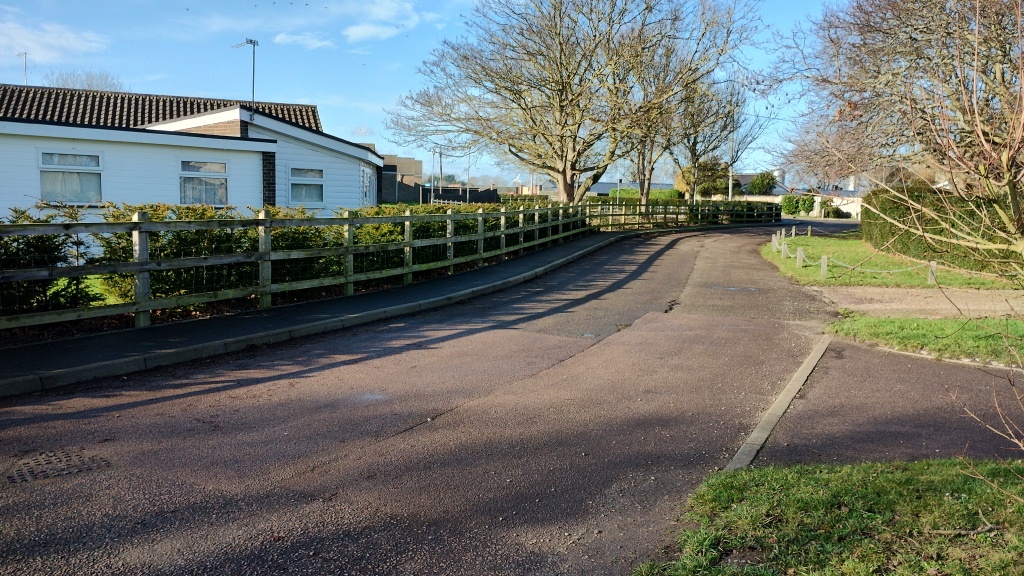 Emerging into the holiday park we follow the road through
the neatly well managed grounds of the estate.
Emerging into the holiday park we follow the road through
the neatly well managed grounds of the estate.
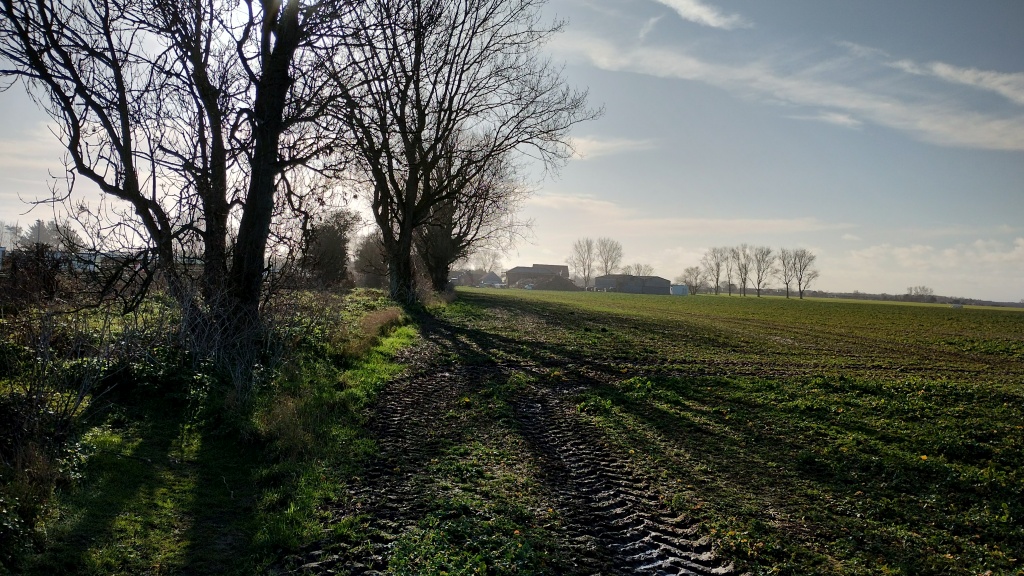 Finally, we end our walk back along the private footpath on
which we started out. You can see some of the old
farmyard buildings in the distance where, for us, home
is found.
Finally, we end our walk back along the private footpath on
which we started out. You can see some of the old
farmyard buildings in the distance where, for us, home
is found.
So ended our walk. We had started out at around 09:30 and got home around two hours later. That included time to have breakfast at Poppy's and stroll around, curiously looking at the signs we found along the way. This was the second time we had done this walk. The first time, we had travelled in the opposite direction, making our way first to the dunes with a return, after a light early lunch at Poppy's, climbing up The Holway. I dare say those from other parts of the country wouldn't call it a climb as the difference in height is only about 15 metres.